Key takeaways
- The season is about ten weeks. Early November to late January, following the herring; February is already late. The season month by month.
- The whales moved roughly 800 km north. The herring’s main spawning grounds have made a poleward shift of about that distance, which is why nobody sells a one-hour orca cruise from the city centre. Where they went, and where they used to be.
- The sun does not rise at all from 27 November to 15 January. The mountains stretch practical darkness to roughly 21 November–21 January, leaving about 09:00 to 14:00 of blue twilight. What that looks like from a boat.
- A Skjervøy day is eight hours of road for two-and-a-half to three-and-a-half hours at sea. Four hours on the bus each way, from a boarding that starts at 04:45. The drive north.
- Nobody guarantees an orca. Some operators offer a free re-booking on another departure if no cetacean is sighted, on their own conditions — a re-book, not a refund and not a promise. What you are actually being sold.
What a whale-watching ticket actually covers
Two very different days, and two very different kits. This is what the operator hands you at the meeting point, and what you are still expected to turn up wearing.
On a Skjervøy day
- Return bus transfer, four hours in each direction, with Wi-Fi, toilets and USB charging
- A full thermal suit, boots, mittens and ski goggles — plus a life vest on the RIBs
- Something hot and something to eat: a drink and a sandwich on one RIB day; fresh baguettes, tea, coffee and biscuits on the other
- Limits apply: minimum age 14 and 140 cm on one RIB, 140 cm and a 120 kg maximum on the other, no under-sixes on the heated boat. Which of them takes children
On a big boat from Tromsø
- Heated saloons with panoramic windows, and a deck to step out onto when something blows
- Lunch on the hybrid-electric catamaran; heated thermal suits and all meals and drinks on the boat that caps itself at 50 passengers
- Guides, a whale presentation, hot drinks, safety gear, seasickness tablets and a second-chance re-booking on the high-speed catamaran
- Not included, anywhere: alcohol, and the layers you wear under the suit. What goes on first
A Skjervøy day, in the order it happens
The twelve-hour version, because it is the one with a real timetable.
Three of the six tours here drive to Skjervøy instead of sailing from Tromsø. They are long. They are also the only way to be standing in the fjord the whales are actually in, and the shape of the day is the same on all three: a dark start, a dark road, one bright-ish window on the water, a dark road home. All three Skjervøy trips.
- 04:45, outside the Scandic Ishavshotell — Boarding for the RIB day starts at Fredrik Langes gate 2 and the bus leaves at 05:00 sharp, which is exactly as sharp as it sounds. Set two alarms.
- 05:20 at Prostneset bus terminal — The other two Skjervøy departures gather on the ground floor at Samuel Arnesens gate 5, behind the Magic Ice bar. One pulls out at 05:30; the other loads a red bus marked “Whale Route Skjervøy” on the platforms.
- Four hours north-east, in the dark — Wi-Fi, toilets, USB charging and no view whatsoever. Four hours on a bus is four hours on a bus, and no amount of Wi-Fi changes that. The road, described honestly.
- Skjervøy, and the walk between the stops — On the heated-boat day the guides meet the first stop, marked with a Skua flag, and walk everyone down to the second one near the Maritim Hotel and the Kystrutekai pier. This is where the coffee happens.
- The suit — Thermal suit, boots, mittens, goggles, life vest, all handed over before you board. You will be given something that makes you look like a traffic cone. Wear it. What goes underneath.
- Two-and-a-half to three-and-a-half hours on the water — The entire point of the day, and it is short. On a RIB you sit low and close; on the covered boat you can go back inside and thaw between sightings. The difference that makes.
- What the skipper is looking for — A carousel: orcas herding herring into a tight ball under the surface, stunning them with tail-slaps, then eating them one at a time. Humpbacks work the same shoals and are often the commoner sighting of the two. Everything else that turns up.
- The turn for home, and four hours back — Most people are asleep within twenty minutes. The best day I have had out there, we did not see an orca until the skipper had already turned for home. The aurora season overlaps this one almost exactly, so the bus window is worth staying awake for. How often that pays off.
Set that against a boat day from Tromsø harbour: seven to nine hours, no bus, warm from start to finish, sailing towards wherever the whales have been reported rather than driving to where they usually are. Neither is the better tour. One takes your day in road time, the other takes it in sea time. Whether either is worth it depends mostly on how many mornings you have, which is the argument for leaving room for a second attempt.
How booking through this site works
Decide about the bus
Everything else follows from that one choice: eight hours of road for a short, close boat trip, or a whole day on a bigger vessel out of Tromsø harbour.
Pick the boat, not the promise
Six listings, six real durations, six live ratings. No operator controls where the whales are, so discount anyone who implies otherwise.
Check live dates
Availability comes straight from GetYourGuide with instant confirmation; the all-inclusive safari also takes free cancellation up to 24 hours ahead.
Leave a spare morning
One departure is one roll of the dice. If the week allows it, keep a second day open before you fly out.
Check dates on the boat most people book
The hybrid-electric catamaran is the default first booking: seven to nine hours, heated saloons with panoramic windows, lunch included, and battery power around the whales so you can actually hear a blow. It also carries the lowest headline rating of the six, 4.5 from 6,653 reviews at the time of writing, and the reason is worth saying out loud — a boat holding a hundred people on a blank day collects disappointment faster than a six-person RIB ever will.
Three kinds of day, side by side
For most first-time visitors I would take the hybrid-electric catamaran in the middle column, and not because it is the best-rated of the three — it plainly is not. It is the only one here that gives you a full day on the water with no bus at either end, a heated saloon to retreat into, and no published age or height bar. The open RIB beside it scores higher, 4.8 against 4.5 at the time of writing, and earns every point of that; it also starts at 04:45, turns away anyone under 14 or under 140 cm, and leaves you sitting in an open boat in an Arctic winter.
| Tromsø: Skjervøy RIB Whale Watching Tour | Our pickTromsø: Whale Watching Tour by Hybrid-Electric Boat | Tromsø: Orca and Whale Watching Heated Boat Trip | |
|---|---|---|---|
| Day length | 12 hours | 7–9 hours | 12 hours |
| Rating | 4.8 from 1,281 | 4.5 from 6,653 | 4.7 from 261 |
| Getting there | Bus, four hours each way | No bus — sails from Tromsø harbour | Bus, four hours each way |
| Time on the water | About three hours | The whole trip | Three to three-and-a-half hours |
| Vessel | 34-foot open RIB | Hybrid-electric catamaran, 100+ guests | Covered, heated premium boat |
| Staying warm | Thermal suit and willpower | Heated saloons, panoramic windows | Heated indoors, deck outside |
| Who it turns away | Under 14, under 140 cm, back problems, pregnancy | No age or height limit published | Under-sixes and pregnant travellers |
| Food on board | A hot drink and a sandwich | Lunch included, more sold on board | Hot drinks and snacks |
| Best for | Getting close, if you can take the cold | A first Arctic whale day | Skjervøy without the open boat |
| View → | Book this → | View → |
Photo Gallery
Nine frames from the season
Everything here was shot in the only light this place has in midwinter, between about 09:00 and 14:00.
All six orca tours we cover
Six listings, six different days out. Where a price would normally sit on these cards you will find the duration instead, because this site prints no figures at all — the operator’s own widget will tell you the rest. The hub, sorted honestly.
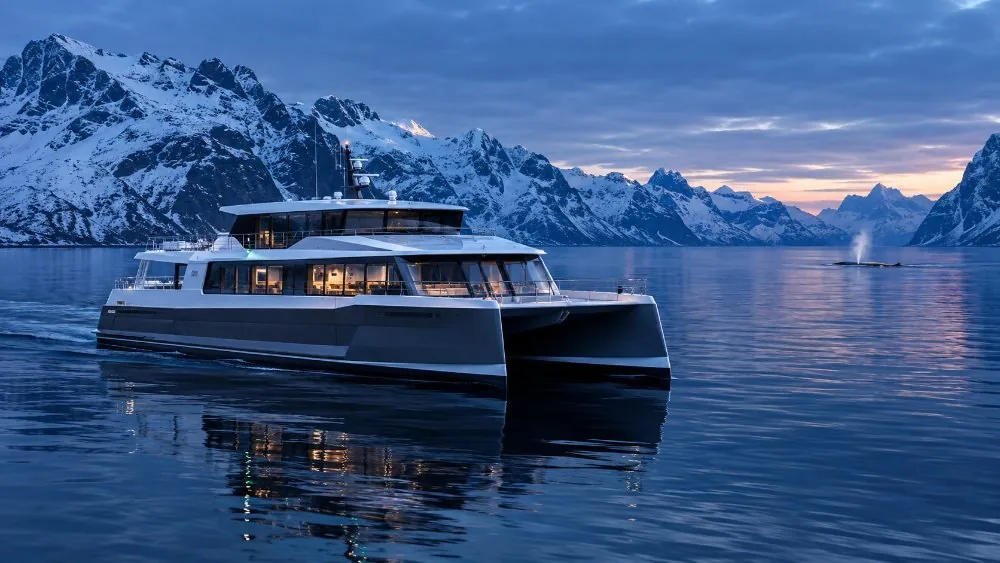 Most booked
Tromsø: Whale Watching Tour by Hybrid-Electric Boat
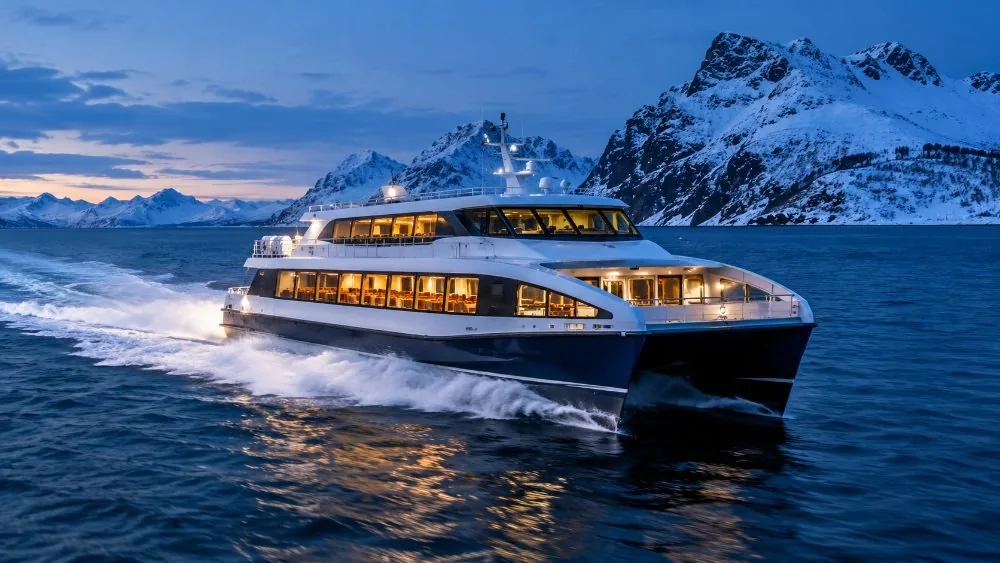 Fast catamaran
From Tromsø: Whale Watching Safari on High-Speed Catamaran
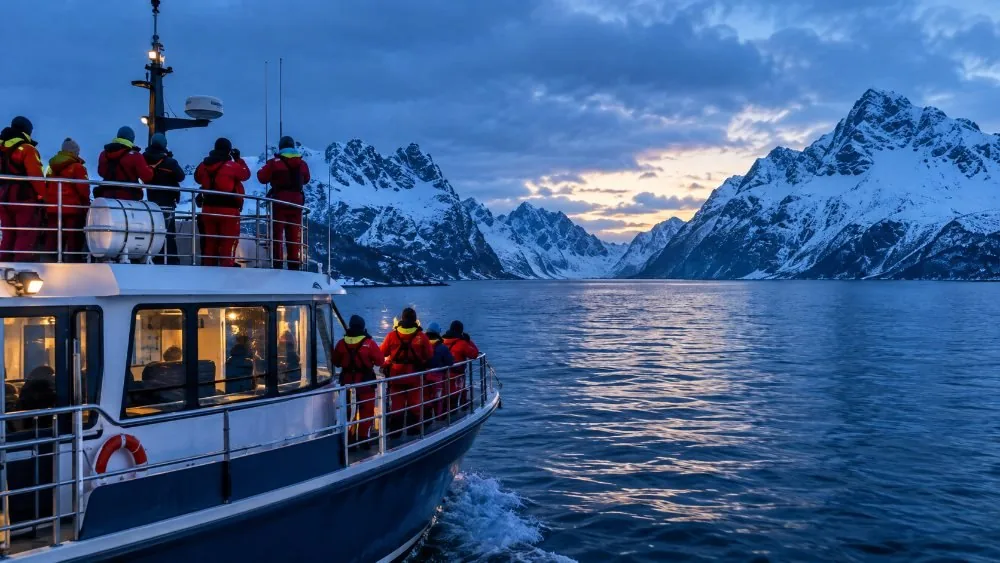 Everything included
Tromsø: Whale & Orca Safari – All-Inclusive (Max 50 pax)
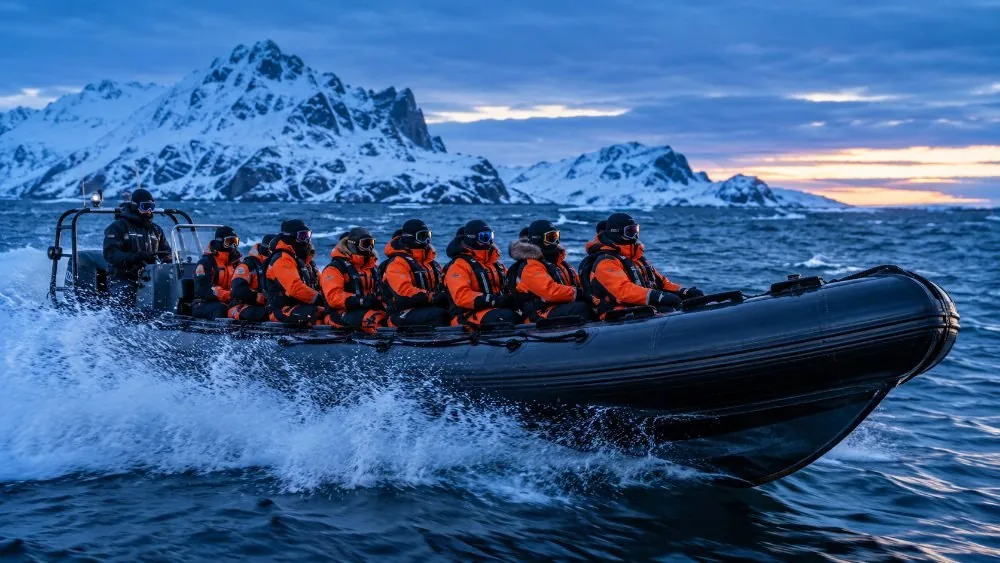 Highest rated
Tromsø: Skjervøy RIB Whale Watching Tour
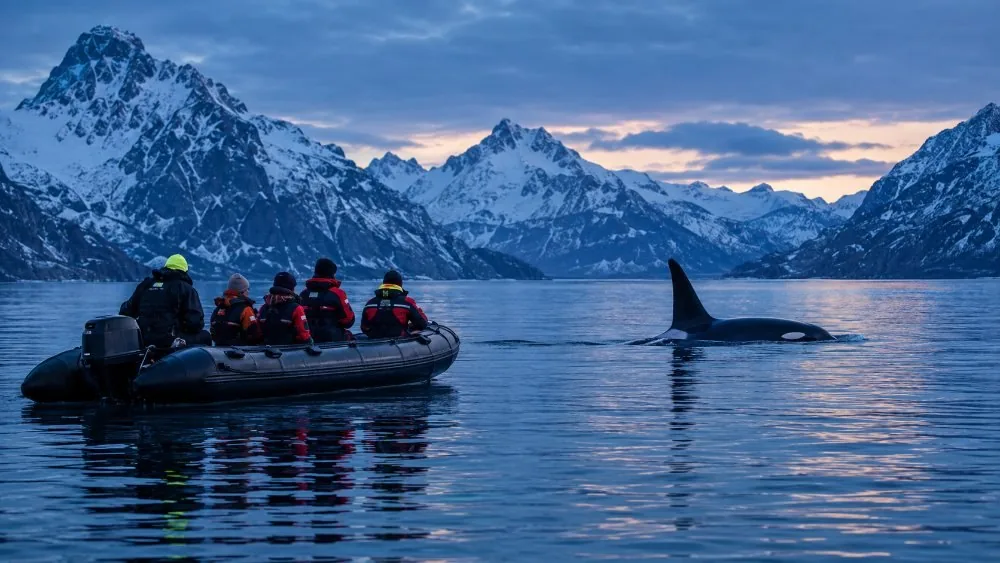 Small RIB groups
From Tromsø: Whale Watching in Magic Skjervøy
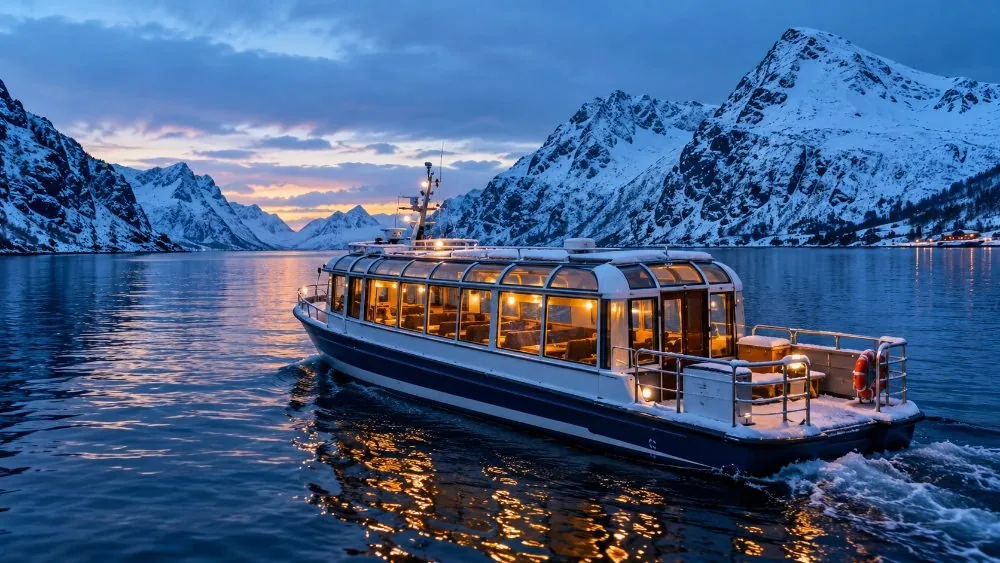 Warm all day
Tromsø: Orca and Whale Watching Heated Boat Trip
What people actually wrote
Straight from the operators’ GetYourGuide listings, one per tour, including the reviewer who came home without an orca. That is a normal outcome here, and you should read one before you book rather than after.
Best day ever! We saw so many whales.
Unfortunately too late for orcas, but we saw other whales.
We saw many many orcas.
The most magical day.
Choose this company if you want a company that cares about the animals.
We left with our heads empty and our hearts full.
Ratings and reviews are the operators’ live GetYourGuide figures. Read our full tour reviews ›
Four things people get wrong before they book
The questions that reach my inbox most often, answered in a line each.
Are there really only 73 orcas left?
That number is real and it belongs to a different ocean: the Southern Resident killer whales off Washington State and British Columbia, an endangered salmon-eating community counted individually every year. Norway’s herring-feeding orcas are a separate population, photo-identified at roughly 1,000 individuals. The numbers in full.
Can I get in the water with them?
Not on anything listed here. Norwegian whale-watching guidelines discourage in-water encounters; snorkelling trips do run out of Skjervøy as a separate specialist product, on different days with different gear and different operators, and none of our six put a passenger in the sea. Why we do not send anyone there.
Will I see a polar bear?
No. There are no wild polar bears in Tromsø or anywhere on mainland Norway; they live on Svalbard, which is a flight away. The city’s polar-bear associations are historical, from the hunting fleet, and museum-based. What you will actually see.
Is Tromsø the whale watching capital of the world?
That is a marketing phrase rather than a title, and it has been claimed for Húsavík, Kaikōura, Hermanus, the Azores and Baja California among others. Nobody awards it. Who else uses the line.
Can’t make these dates?
Browse more available orca watching tours and find one that fits your schedule — all with instant confirmation and free cancellation.
Orca watching from Tromsø, explained
I grew up on Kvaløya and I have done the 04:45 bus more times than I can count, and every winter the same question arrives in the same words. Where do you see the orcas from Tromsø? You don’t. You travel to them, for hours, in the dark, and then you hope. That sentence is the whole site.
The whales followed the herring, and the herring went north
The orcas here are herring specialists. They live on Norwegian spring-spawning herring, they go where it winters, and it has not wintered in the same place for the last thirty years. Through the 2000s the winter shoals sat down in Vestfjorden and around Lofoten, and so did the whale boats. Then the fish moved. Since about 2017 the herring have wintered in the fjords around Skjervøy and Kvænangen, north-east of Tromsø, and the main spawning grounds have made a poleward shift of roughly 800 km.
This is why nobody sells you a one-hour orca cruise from the city centre. There is nothing to see from the city centre. A tour from here is a commute with a gamble at the end of it, and any operator pretending otherwise is selling you the wrong thing. Where they are now, and where they used to be.
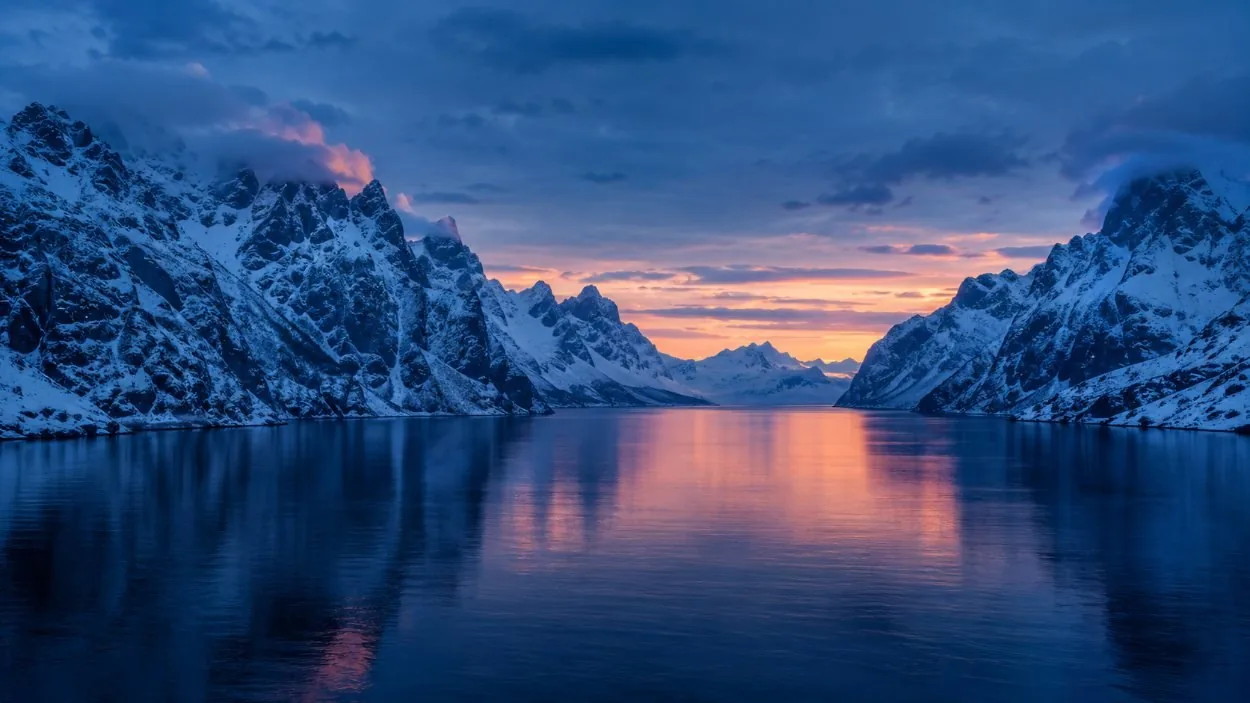
Ten weeks, and five hours of light a day
The season runs from about early November to late January. Outside it the same boats are doing fjord cruises and the orcas are scattered along the coast. February is late enough that I would not plan a trip around it, and I say so on its own page.
Then there is the light, or the absence of it. Tromsø sits at about 69.65°N, well north of the Arctic Circle. The sun does not rise at all between 27 November and 15 January, and because of the mountains it is effectively dark from around 21 November to 21 January. What you get instead is roughly 09:00 to 14:00 of blue twilight. Your twelve-hour Skjervøy day starts in the dark, crosses a mountain road in the dark, catches the only usable light there is, and comes home in the dark. I am not complaining. That blue light is the reason the photographs from up here look the way they do, and if you want to shoot in it, read the camera page before you pack. But nobody should buy this expecting a sunny deck. What polar night actually feels like.
Two kinds of day, and the trade between them
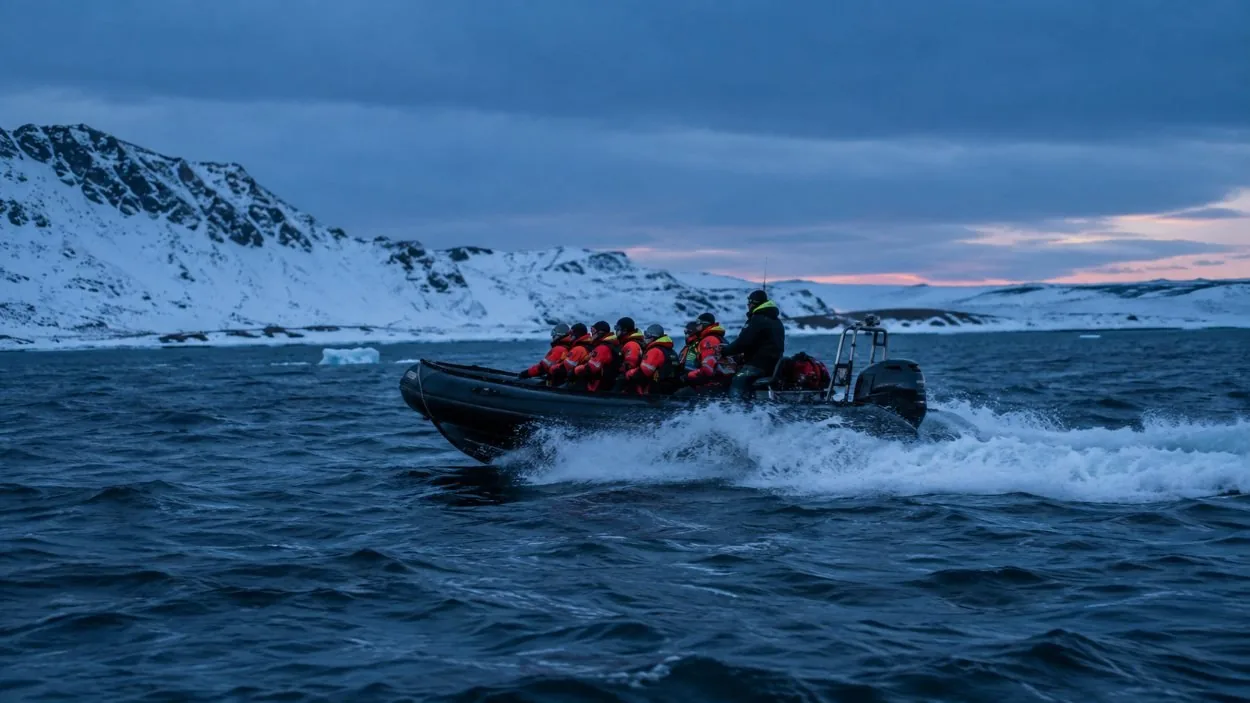
Everything on this site is one of two shapes. A big boat from Tromsø harbour is seven to nine hours, warm, indoor, stable, with a deck to step onto and no bus at either end; it sails towards wherever the whales have been reported. A Skjervøy day is twelve hours, four of them on a bus in each direction, for two-and-a-half to three-and-a-half hours in the fjord the whales are actually in. Smaller groups, lower to the water, colder, and stricter about age and height.
The open RIBs are the coldest and the best-rated of the six, which tells you something about what people value once they are out there. They are also the ones that turn passengers away: minimum age fourteen on one, a 140 cm height floor on both. If you want Skjervøy without sitting in an open boat, the covered heated boat is the compromise, and it is the newest listing here with the smallest review sample. The comparison in full.
What you are actually watching
Carousel feeding. The orcas work cooperatively to herd herring into a tight ball below the surface, stun them with underwater tail-slaps, and then eat them one at a time. It is a group behaviour, it is loud, and it draws everything else in with it. Humpbacks follow the same shoals and are often the commoner sighting of the two; minke and fin whales turn up, and further out some trips have logged sperm whales. Sea eagles come for the same reason the whales do. The rest of the cast — and no, there are no wild polar bears anywhere near Tromsø.
Distance, engines, and staying out of the water
Norwegian whale-watching guidelines ask operators to keep a safe distance, minimise engine noise and disturbance, and let the encounter happen on the whales’ terms. You can hear the difference: reviewers single out captains who are respectful of distance and engine use, and one boat runs on battery around the animals for that reason. In-water encounters are discouraged by the same guidelines. Snorkelling with orcas does exist commercially out of Skjervøy as a separate specialist product, on different days with different gear; the practice is contested and the research literature is critical of it. None of the six tours here involve getting in the sea. The rules, plainly.
What nobody can promise you
Not one operator controls where the whales are. Some offer a second chance, which means a free re-booking on another departure if no cetacean is sighted, on their own conditions — useful, and not the same thing as a guarantee. The best day I have had out there, we did not see an orca until the skipper had already turned for home. The worst was nine hours and one distant blow, and I went back the following week.
So book the day you can actually stand, not the one with the prettiest photographs, and if your week has room in it, keep a second morning free. One departure is one roll of the dice, and the people who go home disappointed are almost always the ones who only rolled once.
Frequently asked questions
When is the best time to see orcas in Tromsø?
Early November to late January, which works out at about ten weeks. The orcas follow Norwegian spring-spawning herring into the fjords north-east of the city, and when the herring move on, so do they. Outside that window the same boats are running fjord cruises rather than whale safaris. The season month by month goes through each one.
Where are the orcas, if they are not in Tromsø?
Around Skjervøy and Kvænangen, north-east of the city and reached by road. Through the 2000s the winter herring, and the orcas with them, were down in Vestfjorden and the Lofoten area; they shifted north, and since about 2017 these fjords have been the centre of it. The herring’s main spawning grounds have made a poleward shift of roughly 800 km. The full story of the move.
Is February too late for orca watching in Tromsø?
It is late. The whole season is built around herring that winter here from about early November to late January, and by February the orcas are dispersing along the coast. The longest published season of the six tours here runs from mid-October to the end of January; nothing on this site is sold as a February orca trip. The direct answer.
Is whale watching in Tromsø worth it?
It is, as long as you know what you are buying: a long day, a short window of usable light and no promise of a whale. The people who come away flattened are usually the ones who booked a single departure on a tight schedule. The ones who left a spare morning usually do not. Our verdict, and how many days to give yourself.
Are orcas dangerous to humans?
No human has ever been killed by a wild orca. Deaths have happened in captivity, which is a different situation entirely. They are the apex predator of the ocean — healthy adults have no natural predator, and sharks, great whites included, are documented as avoiding areas where orcas appear. Nothing on these tours puts you in the water with them. The whole question.
Are there only 73 orcas left?
No. That figure belongs to the Southern Resident killer whales of the north-east Pacific, an endangered salmon-eating population counted individually every year, and has nothing to do with Norway. Photo-identification here has catalogued about 1,000 individuals, at least 862 of which regularly use the coastal waters of Northern Norway. Killer whales are assessed as Least Concern on the 2021 Norwegian red list. More on the numbers.
What happens if we do not see anything?
Usually nothing. You have booked a departure, not a sighting, and no operator controls where the whales are on a given morning. Some do offer a second chance: a free re-booking on another departure if no cetacean is sighted, subject to their own conditions. That is a re-book, not a refund and not a guarantee. Which tours offer one.
Can you swim or snorkel with orcas in Norway?
It exists commercially out of Skjervøy as a specialist product, run on different days with different gear and different operators. None of the six tours on this site involve getting in the water. Norwegian whale-watching guidelines discourage in-water encounters and the research literature on the practice is critical. What we can tell you about it.
Is it dark all day in Tromsø in December?
The sun stays below the horizon from 27 November to 15 January, and the mountains push practical darkness out to roughly 21 November–21 January. What you get instead is about five hours of blue twilight, from around 09:00 to 14:00, which is exactly when the boats are on the water. It is also why the photographs from here look the way they do. Watching whales in that light.
RIB or big boat?
An open RIB puts you low and close to the water in a small group, and it is the best-rated format on this site at 4.8 from 1,281 reviews at the time of writing. It is also freezing, it starts at 04:45, and it turns away anyone under 14 or under 140 cm. A heated boat trades that closeness for a saloon you can thaw in. The two formats side by side.
Still have questions? Email us [email protected]