Photographing Whales in Arctic Twilight
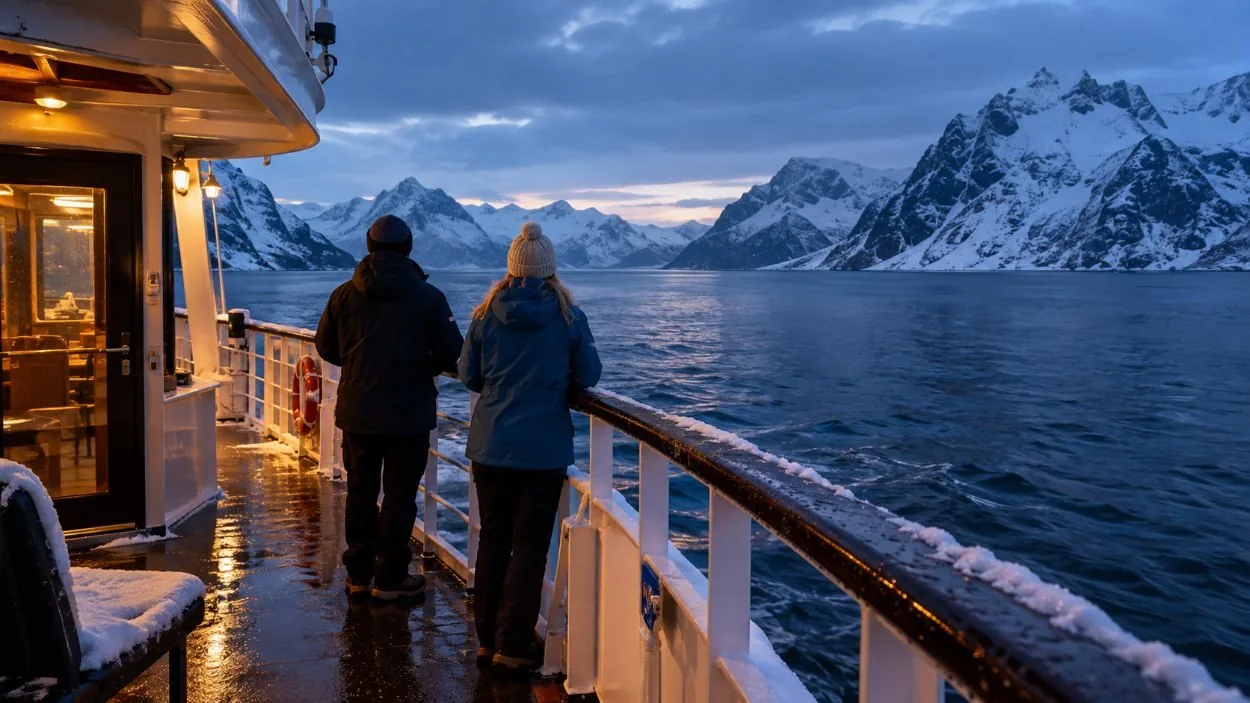
Settings, plainly
- Widest aperture you own. This is the one place a fast lens genuinely earns its weight.
- Shutter speed first. The boat moves, the swell moves, the whale moves. A shutter that is too slow ruins frames you cannot retake.
- Sensitivity as high as the camera will stand. Modern noise is fixable; motion blur is not.
- Continuous autofocus and a burst. A surfacing is over before a considered single frame happens.
- Shoot raw if you can. Blue twilight plays tricks with white balance and you will want to fix it later rather than in a mitten.
The platform is the real problem
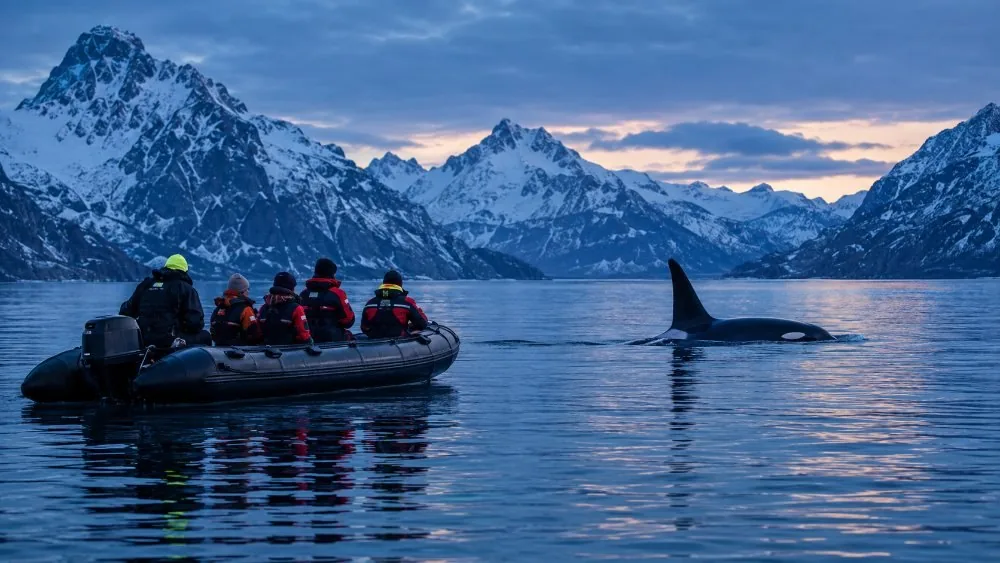
A 34-foot open RIB gets you lower and closer to a surfacing orca than anything else on offer, and it is also the worst tripod ever devised. A big heated boat from Tromsø harbour is steadier and further away, and you are shooting through or over a rail with a hundred people around you. Neither is wrong; they are different pictures. That choice is argued out on RIB versus big boat.
Brace against something solid, keep both elbows in, and shoot in short bursts rather than holding the shutter down through a swell. On the RIB days, camera gear is explicitly at your own risk, and drones are not allowed on either of them.
Keep the spare battery in an inside pocket against your body and swap them round as they fade. A cold battery that reads empty often comes back to life after twenty minutes against your chest. This is the single most useful thing anyone told me about shooting up here.
Cold, condensation and mittens
Two things ruin more shots than any setting. The first is fingers: wear thin liner gloves under the mittens you are issued so you can work controls without bare skin on metal — more on layering in what to wear. The second is condensation: a cold camera carried into a heated saloon fogs instantly, inside and out. Leave it in a bag while it warms up, or leave it outside and stay out with it.
What to actually point it at
Not only the whale. The blow hanging in cold air, the water flat and blue, the mountains behind, people on a deck in survival suits looking the same way — those are the frames that survive the trip home. When orcas are carousel feeding, the herring flashing at the surface is a picture in itself, and it often happens before a fin appears. What is likely to be in front of you is on what else you might see.
Phones
They do better in this light than they used to and worse than you hope, mostly because night modes want you to stand still and you are on a boat. Use whatever burst mode it has, turn off anything that stacks several seconds of exposure, and keep it warm between sightings. Batteries go quickly out there.
Two things worth knowing before you book
One of the six tours includes a safety briefing with photography guidance, which is the covered, heated Skjervøy boat. Another includes photos from the excursion taken by the crew, along with a year’s access to the operator’s orca documentary series — that is the small-group RIB day, listed on the RIB page. If you would rather watch than shoot, the second of those solves the problem neatly.
And the light itself is not optional. It runs about 09:00 to 14:00, and everything above is a response to that — the full explanation is on polar night.
The trip that briefs you on photography
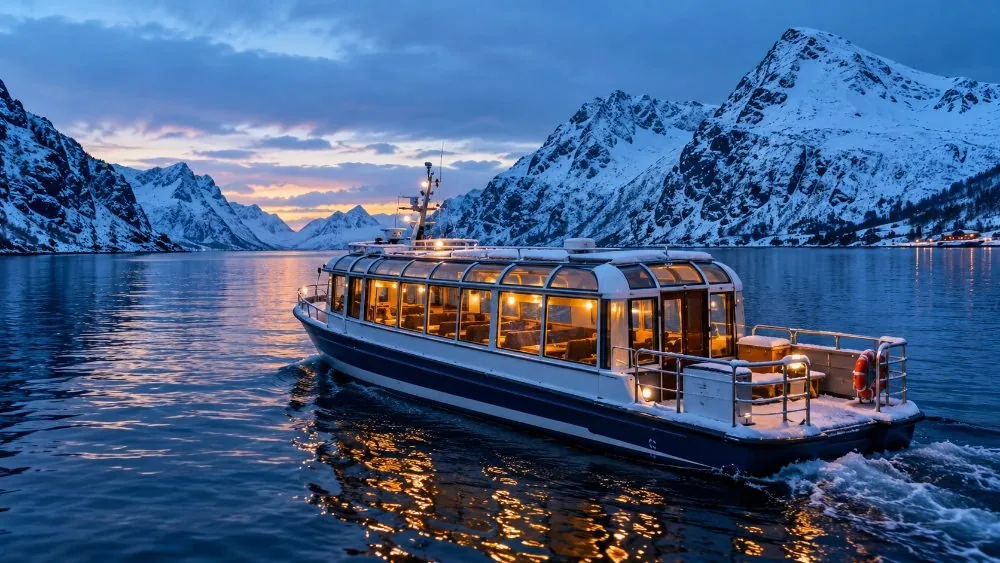
Twelve hours to Skjervøy and back with 3 to 3.5 hours cruising on a covered, heated premium boat, a captain and a nature guide, hot drinks and snacks, and a safety briefing that includes photography guidance. Heated indoor space and an outdoor deck, so you can warm the camera and yourself between sightings. 4.7 from 261 reviews at the time of writing, the smallest sample of the six.
Boats worth shooting from
 Warm all day
Tromsø: Orca and Whale Watching Heated Boat Trip
 Small RIB groups
From Tromsø: Whale Watching in Magic Skjervøy
 Most booked
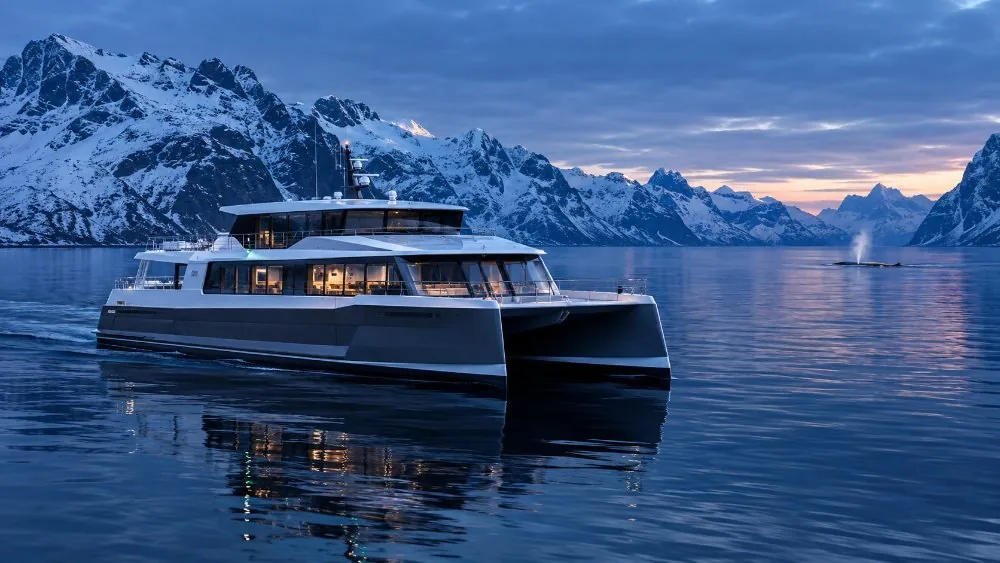
Tromsø: Whale Watching Tour by Hybrid-Electric Boat
Frequently asked questions
What camera settings work for whale watching in Tromsø?
Widest aperture you have, sensitivity pushed high, and a shutter fast enough to beat the boat’s movement, with continuous autofocus and a burst. You are working in about five hours of blue twilight between roughly 09:00 and 14:00, so grain is the price of a sharp frame — see polar night for the light.
Can you take good photos of orcas in the dark?
It is twilight rather than darkness, and the blue light is the reason photographs from here look distinctive. The difficulty is the moving platform, not the exposure. A RIB gets you close and moves most; a large heated boat is steadier and further off — see RIB versus big boat.
Do whale tours in Tromsø allow drones?
Not on the tours listed here that state a policy: both the high-speed catamaran and the open RIB day to Skjervøy prohibit them. Assume no, and ask the operator if it matters to you. Camera gear on the RIB days is carried at your own risk — the conditions are summarised on what is included.