What to Wear Whale Watching in Tromsø
What the operators give you
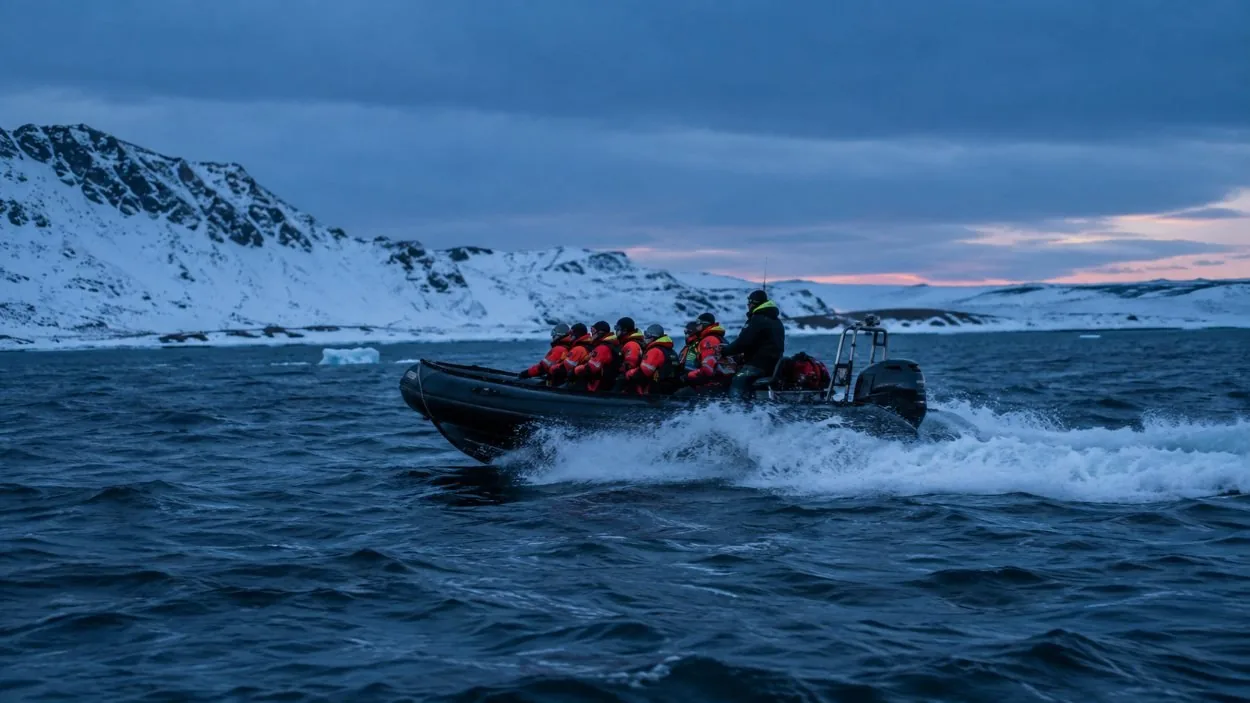
The two RIB days to Skjervøy issue the most kit, because they have to. One provides a thermal suit, boots, mittens, goggles and a life vest; the other provides thermal suits, mittens, balaclavas, waterproof boots and ski goggles. The all-inclusive safari from Tromsø provides heated thermal suits. The heated Skjervøy boat and the big boats from the harbour are built around indoor space instead, which changes what you need rather than removing the need. The full breakdown is on what is included.
The layers that are yours to sort out
Bring these
- Merino or synthetic base layer, top and bottom
- A fleece or light down mid-layer
- Thick wool socks, one pair, properly dry
- A wool hat that fits under a hood
- Thin liner gloves for camera and phone
- A neck gaiter or buff
Leave these behind
- Cotton anything — it holds sweat and then holds cold
- Jeans
- Trainers or thin boots you plan to stand in for hours
- A single very thick jumper instead of layers
- Loose scarves that catch in a hood or a life vest
Why cotton is the one real rule
You will sweat on the walk to the meeting point and on the bus, and cotton keeps that moisture against your skin for the rest of the day. Wool and synthetics move it away. This is the difference between being cold in hour five and being fine in hour eight, and it is the single most common mistake I have watched people make on a Skjervøy morning.
Dress for standing still on a moving boat, not for walking to it. You will be stationary, facing into wind, for hours, and the suit is windproof rather than warm. Anyone who has spent an hour on an open deck waiting for a blow will tell you the same thing.
Feet and hands
Boots are provided on the RIB days. On the big boats they are not, so bring insulated waterproof boots with room for a thick sock — a tight boot is a cold boot, every time. For hands, wear thin liner gloves under the mittens you are given, so that you can take a photograph without exposing bare skin. Getting a camera out in that air with nothing on your fingers is a mistake you make once. More on that on photography tips.
The two shapes of day, dressed differently
What works
- Big boat from Tromsø: you can go inside whenever you want, so dress for the deck and shed layers in the saloon
- Big boat: bring your own good boots, since no thermal suit is issued on the hybrid-electric or catamaran trips
- Heated Skjervøy boat: heated indoor space and an outdoor deck, so the same approach applies over a twelve-hour day
Worth knowing
- Open RIB: there is no inside. Everything you are wearing at 09:00 is what you have at 12:00
- Open RIB: spray happens, and wet gloves cannot be dried out there
- All twelve-hour days: you start in the dark at 04:45 or 05:20 and finish in it, so pack for the bus as well as the boat
Which of those days you are in for is decided on RIB versus big boat, and the RIB pair are listed on the RIB page.
One last thing about the dark
You are dressing for a day that never gets properly light. The temperature does not do the usual midday climb, because there is no midday sun to do it — the sun is below the horizon from 27 November to 15 January, and the practical dark runs wider than that. Plan your clothing for the coldest part of the day and assume the whole day is the coldest part. Polar night explains what that actually looks like.
The trip the gear list exists for
Twelve hours, about three of them in a 34-foot open RIB in the fjords around Skjervøy, with a thermal suit, boots, mittens, goggles and a life vest provided and a hot drink and a sandwich along the way. Minimum age 14, minimum height 140 cm, not suitable for pregnant travellers or anyone with back problems. 4.8 from 1,281 reviews at the time of writing.
Frequently asked questions
What should I wear whale watching in Norway in winter?
Wool or synthetic base layers top and bottom, a fleece or light down mid-layer, thick wool socks, a hat that fits under a hood and thin liner gloves. No cotton at all. Most tours issue a thermal suit over the top, and the RIB days add boots, mittens and goggles — the lists are on what is included.
Do I need my own boots for a Tromsø whale tour?
On the two RIB days to Skjervøy, no — boots are provided. On the big boats from Tromsø harbour they are not, so bring insulated waterproof boots with room for a thick sock. A tight boot is a cold boot. Which sort of day you are on is decided on RIB versus big boat.
How cold does it get on a whale watching boat in Tromsø?
Cold enough that the clothing matters more than the forecast. You are stationary on a moving boat, facing into wind, in an Arctic winter with no sun above the horizon, for up to three hours in an open RIB. The suit you are given is windproof rather than warm — see polar night for what the day is like.