Whale Watching Ethics and the Rules
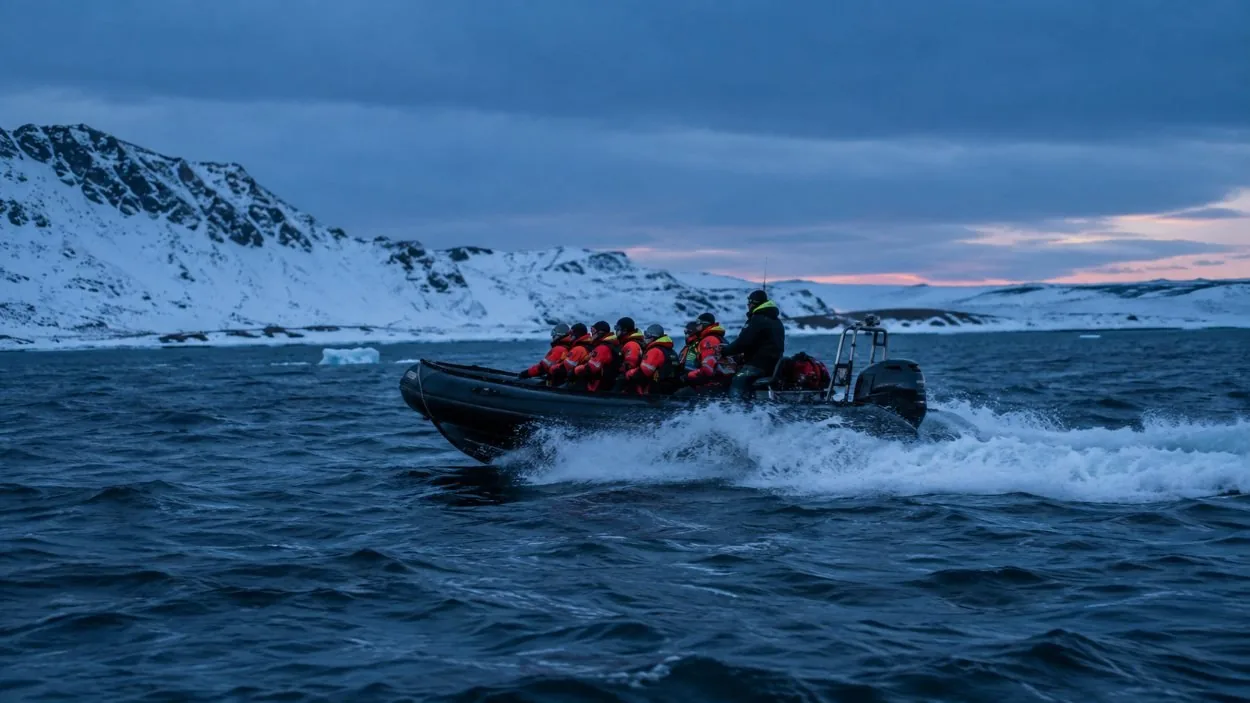
What the guidelines ask for
Three things, and all of them are about restraint. Keep a safe distance from the animals. Minimise engine noise and disturbance. Let encounters happen on the whales’ terms rather than your passengers’. None of that stops a whale choosing to come to a boat, and when one does, the right response is to do nothing and let it.
The reason this matters more here than in a lot of places is what the animals are doing. The orcas in these fjords are carousel feeding: herding herring into a tight ball below the surface, stunning them with underwater tail-slaps, eating them one at a time. It is coordinated work, and a boat pushing into the middle of it is not a neutral observer. More on the behaviour on what else you might see.
What good practice looks like from the deck
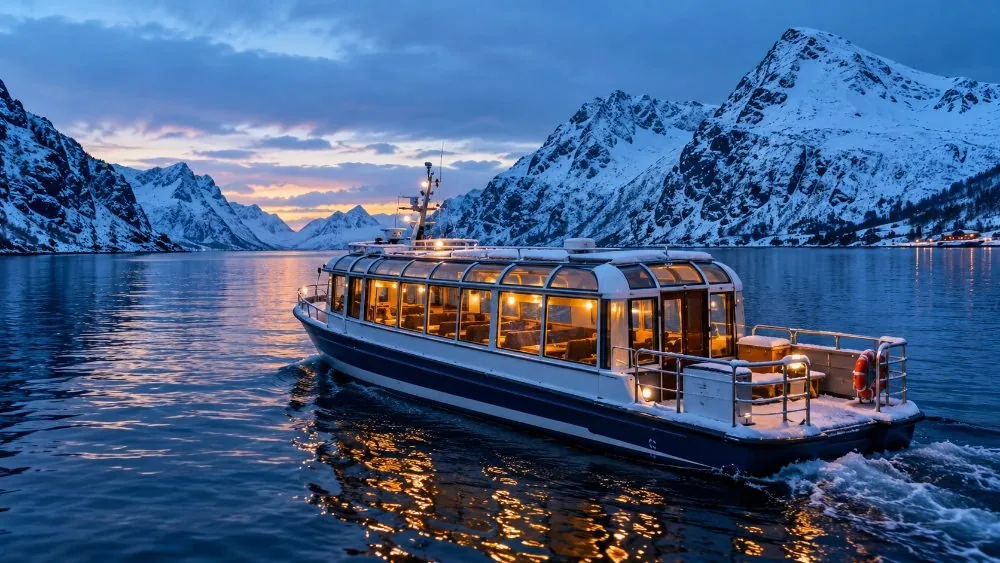
- The engine goes quiet when whales are close, and stays quiet. The hybrid-electric catamaran runs on battery around them, which is the clearest version of this there is.
- The boat stops rather than chasing. A skipper positioning and waiting is doing it right; a skipper repositioning every ninety seconds is not.
- Nobody promises you anything to get you on board — see sightings and guarantees.
- The crew say no sometimes. To a closer approach, to a longer stay, to a departure when the weather says otherwise.
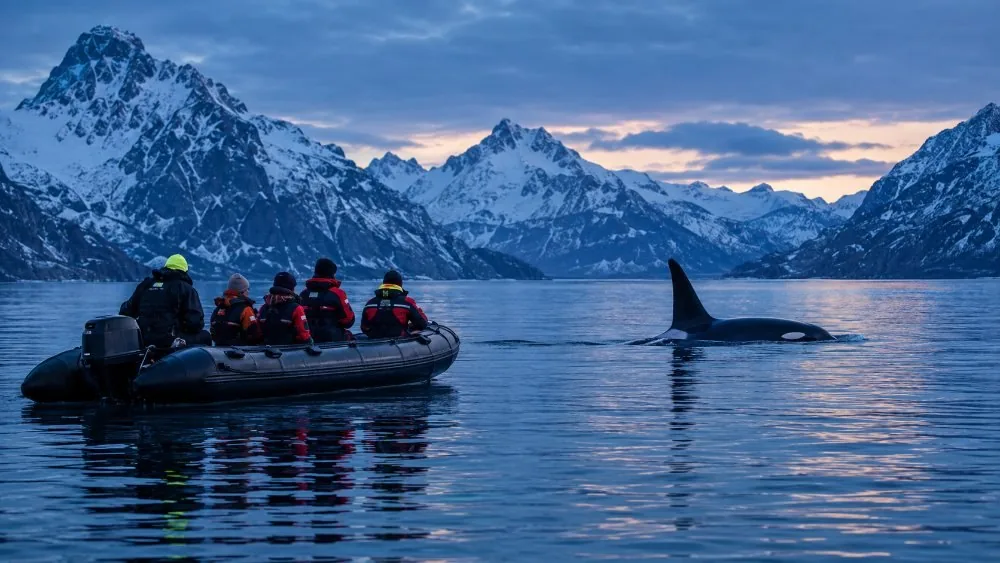
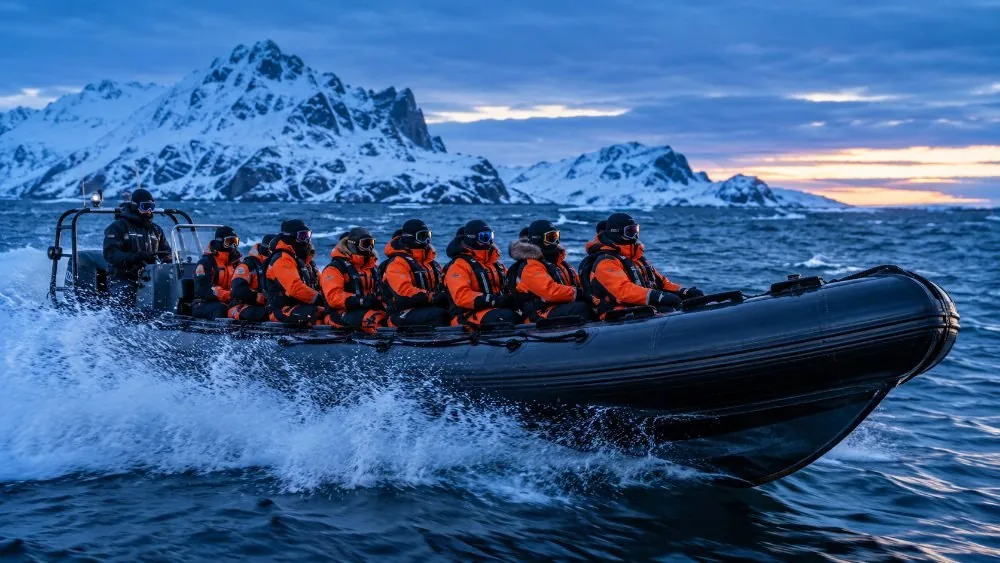
Reviewers notice all of this, which is more encouraging than it sounds. One review of the heated Skjervøy boat praises a captain as really respectful of distance and engine use. The small-group RIB collects the same theme over and over: one reviewer praising respect for the rules and health of the mammals, another saying to choose this company if you want one that cares about the animals. That is not marketing copy. That is passengers noticing.
Ask the crew, early in the day, what their approach rule is. A good answer is specific and comes immediately, because they have thought about it. A vague one tells you something useful too, and you still have the whole day to watch what they actually do.
In-water encounters
Snorkelling with orcas exists commercially out of Skjervøy as a separate specialist product, on different days, with different gear and different operators. The Norwegian guidelines discourage in-water encounters, and the research literature on the practice is critical. None of the six tours listed on this site involve getting in the water, and this site does not send anyone to book one. The fuller, neutral account is on swimming with orcas.
Is whale watching itself a problem?
What works
- Killer whales are assessed as Least Concern on the Norwegian red list from 2021 and in the 2023 European regional assessment
- Photo-identification of about 1,000 individuals is built partly on the water these boats work
- Quiet vessels exist and are being used — battery power around the whales is real, not a slogan
- Passengers who have watched a hunt properly tend to care about it afterwards
Worth knowing
- Boats in a feeding area are a disturbance, however well handled
- Guidelines are guidance, and the standard varies with the crew
- A busy season concentrates a lot of hulls into a few fjords
- In-water encounters remain contested and are discouraged
What you can do about it
Book a crew with a reputation for restraint, take the smaller group if the choice is between equals, and do not push the guide to go closer. That last one matters more than people think: a skipper under pressure from a deck full of people is a skipper making a worse decision. If you are weighing up boats on this, the small-group options are on the RIB page and the whole catalogue is on the all-tours page.
And if the day produces nothing, let it produce nothing. The animals do not owe anybody a performance, which is the position taken throughout is it worth it.
The operator reviewers keep praising for this
A twelve-hour day from Prostneset bus terminal with a RIB carrying four to twelve people, thermal suits and full kit, fresh baguettes and hot drinks, photos from the excursion, and a year’s access to the operator’s orca documentary series. Its reviews return again and again to how the animals are treated. 4.7 from 1,211 reviews at the time of writing.
Small-group trips
 Small RIB groups
From Tromsø: Whale Watching in Magic Skjervøy
 Highest rated
Tromsø: Skjervøy RIB Whale Watching Tour
 Warm all day
Tromsø: Orca and Whale Watching Heated Boat Trip
Frequently asked questions
What are the rules for whale watching in Norway?
The national guidelines ask operators to keep a safe distance from the animals, minimise engine noise and disturbance, and let encounters happen on the whales’ terms. In-water encounters are discouraged. They are guidance rather than a barrier, so the crew you book with matters — the six options are on the all-tours page.
Is whale watching bad for the whales?
Any boat in a feeding area is a disturbance, which is why the distance and engine-noise guidelines exist. Killer whales here are assessed as Least Concern on the Norwegian red list from 2021 and in the 2023 European regional assessment. Choosing a restrained crew and a smaller group is the practical response — see the RIB page.
Can you swim with orcas on these tours?
No. None of the six tours listed on this site involve getting in the water, and Norwegian guidelines discourage in-water encounters. Snorkelling trips are sold separately out of Skjervøy by other operators, and the research literature on the practice is critical — the neutral account is on swimming with orcas.